 by
by Who is the $36B AI founder nobody's ever seen?
Bloomberg updated its Billionaires Index this week and the richest person ever to build an AI model is not running a trillion-dollar American lab. He runs a company one-nineteenth the size of Anthropic, out of Hangzhou, and he is worth four and a half times more than Anthropic’s CEO. The ranking is not a scoreboard. It is an ownership lesson, and it says something we have been positioning around for months.
- DeepSeek closed a $7.4B round in June at a $50B valuation (up from $10B in April), and Bloomberg's July 13 update more than doubled founder Liang Wenfeng's net worth to $36B: the richest founder of an AI-model company in the world.
- Liang is ahead of OpenAI's Greg Brockman (~$25B) and far ahead of Anthropic's Dario Amodei (~$8B), because he still owns ~78% of DeepSeek after funding it himself out of his quant fund High-Flyer.
- The contrast: Brockman holds ~2.9% of an $852B OpenAI, Amodei under 1% of a $965B Anthropic, and Sam Altman holds no direct OpenAI equity at all.
- Normalized, each $1B of company value produced $720M of founder wealth for Liang versus $29M for Brockman and $8M for Amodei: the compounding cost of the American dilution model.
- The desk's read: DeepSeek can give weights away and price its API near cost precisely because one researcher owns 78% and answers to no revenue model. The commoditization wave is what a founder-controlled lab does when its cap table lets it.
- The TT desk call: long control, short applause: keep working on independent Chinese-lab exposure (DeepSeek and peers) via pre-IPO and secondary channels, while sizing for the key-man and geo-block risk that 78% single-owner control carries.
Bloomberg · @business · The Standard · Forbes · Fortune · ChinaTalk · The Circuit (YouTube) · Core Memory (YouTube) · Dwarkesh
What actually happened
DeepSeek closed a $7.4B round in June at a $50B valuation, up from $10B in April, and only the second time the company has ever taken outside money. Bloomberg re-ran the math on July 13 and Liang Wenfeng’s net worth more than doubled overnight: from $16.7B to $36B. That makes him the richest founder of an AI model company in the world, ahead of OpenAI’s Greg Brockman (~$25B) and far ahead of Anthropic’s Dario Amodei (~$8B). The only AI founder worth more is Cambricon’s Chen Tianshi (~$40B), and he builds chips, not models.
The round diluted Liang from an estimated 84% to at least 78%, and still added $19B to his name in a day, because 78% of $50B is a bigger number than 84% of $10B. Sources: Bloomberg Billionaires Index, July 13-14, 2026.
The slice beats the pie
Put the four founders side by side and the ranking stops being surprising. It is arithmetic. Liang owns at least 78% of DeepSeek, because he funded it himself out of his quant fund and refused outside capital for three years. Brockman’s OpenAI stake, disclosed at $20-30B in court during the Musk lawsuit, works out to roughly 3% of an $852B company. Amodei and each of Anthropic’s seven co-founders hold less than 1% of their $965B lab. And Sam Altman, famously, holds no direct OpenAI equity at all: his ~$2B came from the YC-era portfolio: Reddit, Stripe, Helion.
Brockman’s stake is our estimate from his court-disclosed $20-30B holding against OpenAI’s $852B valuation. Amodei’s “under 1%” is per Bloomberg’s analysis of the May round; Altman’s zero is by his own long-standing choice.
Anthropic’s May round put all seven of its co-founders into the world’s richest 500 at ~$8B each, the most from one company added to the index in a single day. It still leaves the entire founding team of a $965B company worth less, combined, than one man’s stake in a $50B one.
The cleanest way to see it is to normalise: how much founder wealth does each $1B of company valuation produce?
Per dollar of enterprise value, Liang has kept ~25× more than Brockman and ~90× more than Amodei. This is the compounding cost of the American frontier-lab funding model, measured in founder equity.
Why the gap? Because the US labs bought their scale with dilution. Anthropic has raised again and again ($65B in May alone) and OpenAI took $122B in March. Every round made the companies bigger and the founders proportionally smaller. DeepSeek ran the opposite experiment: it was bankrolled by Liang’s own hedge fund, High-Flyer, and simply did not sell equity until this year. The Bloomberg headline is what that decision looks like after the repricing.
The size of your slice matters more than the size of the pie, and the intact slices are all in China.
Four founders, up close
Liang WenfengDeepSeek · $36B · b. 1985
Liang is the anti-Altman in every observable way. Born in 1985 in a village outside Zhanjiang, Guangdong, to a father who taught primary school, he went to Zhejiang University for electronic engineering, ran the quant fund High-Flyer to roughly $8B of assets, and then spent its GPU stockpile on an AGI lab that nobody in Silicon Valley took seriously until January 2025. Colleagues describe his days as indistinguishable from a researcher’s: reading papers, writing code, sitting in seminar discussions. When he went home for Lunar New Year after the R1 release, the village had to manage crowds of visitors: the only paparazzi moment he has ever generated.
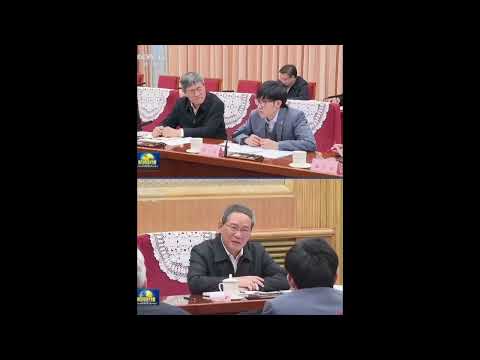
His personal life is, deliberately, a blank page: no known interviews on camera, no conference keynotes, no yacht photos, no disclosed family. He has given exactly two substantial interviews, both in text, to the Chinese outlet 暗涌 (Waves): the ChinaTalk translation is the canonical read, and the closest thing to video is a voiced reading of that interview. His $36B is also the least liquid fortune on this list: 78% of a private company he refuses to promote, run by a man who told Waves that price wars bore him and “innovation is a matter of belief.”
 ▶ play
Liang has never appeared on camera; this is a voiced reading of his 暗涌/Waves interview, the only long-form record of how he thinks.
▸ Video summary — Liang in his own words
Condensed by the desk from the ChinaTalk translation of the 暗涌/Waves interview this video narrates.
- China's real gap is not one or two years: it is originality vs imitation. Following forever is the cost of not doing original work.
- Open source is culture, not charity: the moat is the team's accumulated ability. “Moats created by closed source are temporary.”
- The famous price war wasn't one: “we cut prices because our costs decreased”; AI and APIs “should be affordable to everyone.”
- Hiring: fresh graduates, passion over credentials, deliberately no overseas stars. Sharp young people push frontiers.
- ~50,000 Hopper GPUs from High-Flyer meant zero fundraising pressure: the structural fact behind everything above.
- “OpenAI is not a god”, and the accidental-catfish line: “we didn't mean to become a catfish.”
Dario AmodeiAnthropic · ~$8B · b. 1983
Amodei is the closest the US field has to Liang’s researcher-monk archetype, except he chose the dilution. San Francisco born, son of an Italian leather craftsman and a library project manager, Princeton biophysics PhD, he left OpenAI in 2020 with six colleagues including his sister Daniela, who runs Anthropic as president while he runs it as CEO; the two say they have talked nearly every day of their lives. He keeps his private life almost entirely out of the press: the profile pieces get his espresso habits and his essays, not his home.
The financial fact that defines him: he owns less than 1% of a $965B company that just filed confidentially to IPO. On the Dwarkesh podcast in February he argued we are “near the end of the exponential,” with a country of geniuses in a datacenter a few years out, a worldview in which owning 1% of the winner matters more than owning 78% of anything else. The IPO will test that arithmetic in public.
 ▶ play
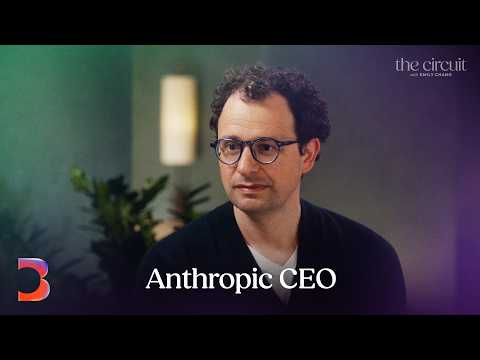
The most recent long-form Amodei: Emily Chang’s extended Circuit interview (June 2026): the race with OpenAI, the Pentagon standoff, and the endgame.
▸ Video summary — what Amodei argues
Condensed by the desk from the episode and his February Dwarkesh appearance — the fuller version of the same worldview.
- The sit-down covers his San Francisco roots, the race with OpenAI, the Pentagon standoff over usage limits, and the endgame.
- His frame: “we are near the end of the exponential”: a “country of geniuses in a datacenter” within a few years, not decades.
- The lag between model capability and economic diffusion is the business opportunity: enterprises adopt slower than models improve.
- Safety as strategy, not brake: the enterprise bet is that the most trusted lab wins the biggest contracts.
- Context for the interview: Anthropic had just raised at $965B and filed confidentially to IPO.
Sam AltmanOpenAI · ~$2B, none of it OpenAI · b. 1985
Altman runs the most valuable startup in American history and owns none of it, a decision that began as nonprofit governance hygiene and became the strangest fact in tech finance: the CEO of an $852B company is the poorest person in this note. His ~$2B is old money by Valley standards: early Reddit, early Stripe, and a large personal bet on Helion’s fusion reactors. St. Louis kid, Stanford dropout, ran Y Combinator at 28.
He is also the only one of the four with a public family life: he married software engineer Oliver Mulherin in a small ceremony in January 2024, and their son was born in February 2025: premature, weeks in the NICU, an experience Altman wrote about with unusual openness. In April he and Brockman sat for their first joint podcast in a decade and spent ninety minutes on the restructuring, the Musk litigation, and what OpenAI cut to stay focused.
Greg BrockmanOpenAI · ~$25B · b. 1987
Brockman is the inversion of his own CEO: the co-founder who did keep equity, and it made him the richest American on the list, a stake he had to disclose at $20-30B under oath in the Musk trial in May. Raised on a North Dakota farm, he dropped out of Harvard and then MIT, became employee-adjacent-#1 and CTO at Stripe, and has been OpenAI’s indestructible builder through every governance convulsion, including the 2023 board coup he resigned over in solidarity with Altman, and returned within days.
He married Anna in November 2019 in the OpenAI office, with a robot hand as ring bearer, still the most on-brand wedding in the industry. At Sequoia’s AI Ascent in April his thesis was that human attention, not compute, is becoming the bottleneck. Coming from the man whose attention survived ten years of OpenAI, it lands.
 ▶ play
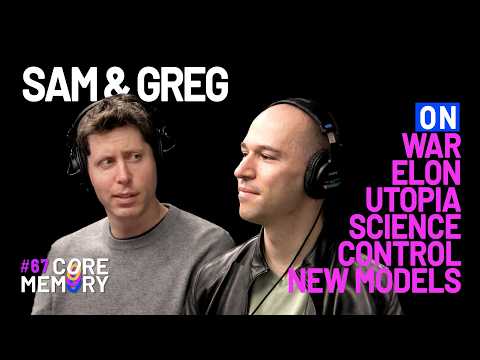
Altman and Brockman’s first joint podcast in ten years (Core Memory, April 2026): the restructuring, the Musk fight, and the next decade.
▸ Video summary — ten years of OpenAI, condensed
Condensed from the episode via The AI Corner's recap.
- Brockman's filter question, “is this the most important thing?”, killed the Sora social app and redirected the robotics team.
- GPT-5.4 Pro solved an open Erdős problem; Terence Tao says it reveals connections between fields. AI moving from assisting to driving discovery.
- The business model, stated plainly: “rent or buy compute, resell at margin”; demand grows as models improve.
- The defensible layer is orchestration (memory, workflows, integrations), not the commoditising model itself.
- Musk trial detail: the core demand was “absolute control” of OpenAI; 2 of 26 original claims survived.
- Altman's economic futures range from broad prosperity to “maybe 10 trillionaires”, his own words on the stakes.
Why this keeps us interested in China AI
We wrote yesterday about Chinese open models taking nearly half of OpenRouter’s tokens. This ranking is the other half of that story, because ownership concentration is not a trivia fact: it is the strategy. DeepSeek gives its weights away, prices its API near cost, and skips entire fundraising cycles precisely because one researcher owns 78% of it and answers to nobody’s revenue model. The commoditisation wave we keep writing about is not an accident of Chinese engineering culture. It is what a lab does when its cap table lets it.
The American structure cannot copy this. A lab that has taken $187B of outside money across two rounds owes its investors a margin, which means it owes the market a price, which means it cannot follow DeepSeek to the floor. That asymmetry (one side structurally free to destroy the model layer’s economics, the other structurally forbidden to) is the core of our China AI interest, more than any benchmark. And the founder-control map tells you it extends beyond DeepSeek: the independent Chinese labs are still founder-run in a way the US frontier has already financed away.
Our position, stated plainly
We keep working on exposure to independent Chinese AI labs through pre-IPO and secondary channels. DeepSeek’s June round was the first crack in the door, and the repricing from $10B to $50B in ninety days shows what happens when a closed cap table opens even slightly. Founder-controlled labs are the only ones whose strategy we can actually predict: they will keep shipping open weights and keep pricing at cost, because nothing in their structure punishes it.
!The honest flip side: 78% ownership is key-man risk with a valuation attached. There is no succession story at DeepSeek, no board that could produce one, and the same geo-block we flagged yesterday applies in full. A $36B paper fortune in a company one person controls, in a jurisdiction one party controls, is not a diversified asset. Size accordingly.
The TT desk thoughts
The list itself is the trigger, not the names on it. For three years the market assumed AI wealth would pool where AI capability pooled: in the two American labs now carrying $1.8 trillion of combined paper value. Bloomberg’s update says the wealth pooled somewhere else: with the one founder who never sold. A company 19× smaller produced a founder 4.5× richer. That is not a curiosity. That is the market quietly repricing what control of a frontier lab is worth relative to a diluted share of a bigger one.
Watch three things from here. First, whether DeepSeek raises again: a second round at a higher mark would confirm the $50B was an opening bid, not a ceiling. Second, the Anthropic IPO: the moment those sub-1% stakes mark to a public price, the American side of this chart gets a real number instead of an estimate, and the comparison gets honest. Third, whether Liang ever monetises anything. Our bet is he does not, because everything he has ever said suggests the fortune is a side effect he finds mildly embarrassing. The man is the position: long control, short applause.
What would change our mind
The next wealth update showing the pooling revert to the two US labs. We read the list as the trigger rather than the names: a reversion would say this was a snapshot, not a shift.
Keep reading
China AI vs. USA AI: the routing data · Do AI margins move from the labs to the infra? · The ASI transition: naive, or naive squared?