 by
by Balaji Srinivasan: crypto identity and the network state
Balaji Srinivasan spent 2023 to 2026 turning a 2022 book into dirt. Today he signed a memorandum of understanding in Kazakhstan to build a privately-funded Network School campus — campus, then village, then a city of 10,000-plus, larger than Tuvalu. For a crypto desk the question is narrower than the spectacle: what in this arc is actually investable, how much of his track record is direction versus timing, and why he and Naval are the two feeds worth watching as crypto bends toward identity and sovereignty.
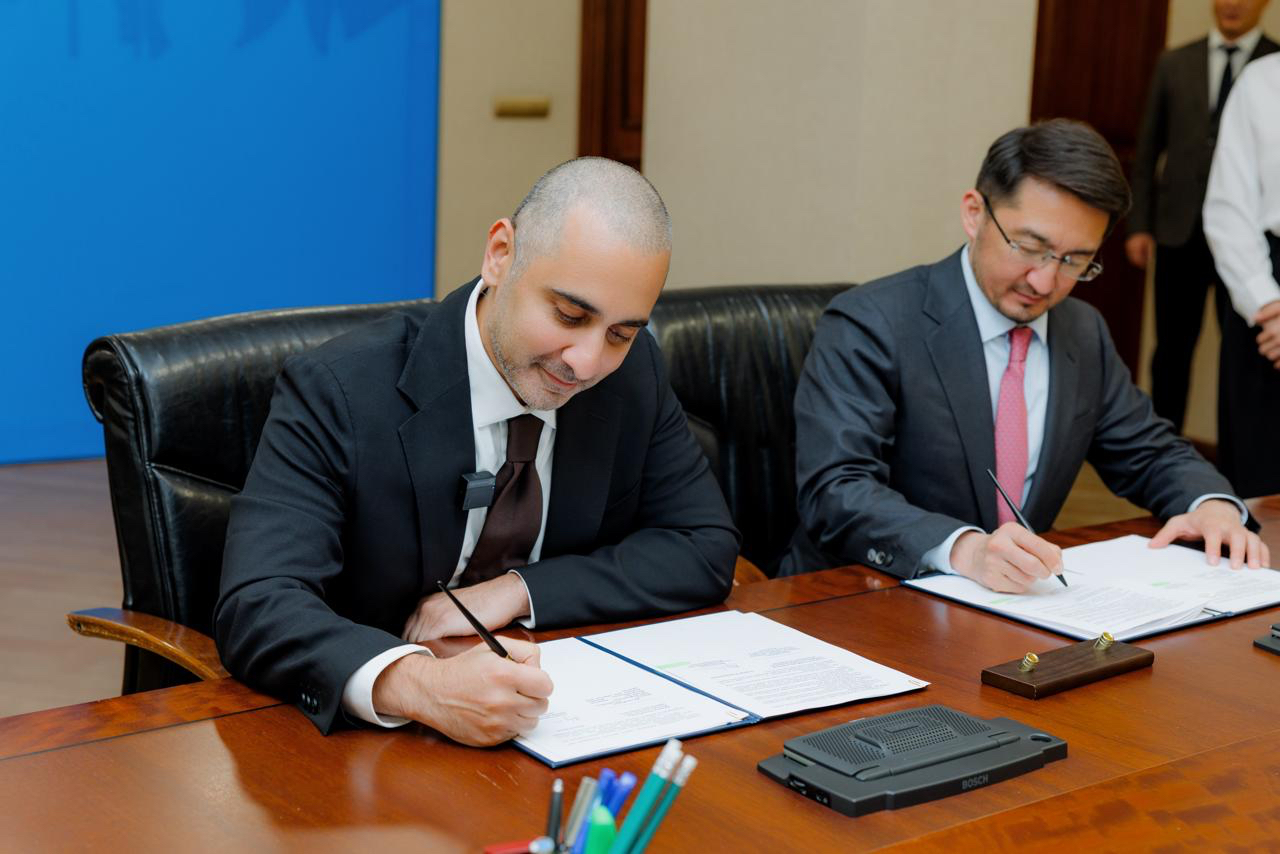
- On July 25 2026 Balaji signed an MOU for a Network School campus in Kazakhstan. The project is fully privately funded — no Kazakh state capital — and scales campus → village → city, targeting 10,000+ residents (larger than Tuvalu, the smallest UN member state).
- His stated crypto thesis, given at TOKEN2049 Singapore (Oct 2025) and the FII9 "Future Flash" talk (Sep 2025): the market arc is ICOs → NFTs → memecoins → crypto identity, and his Balaji Fund is deploying more than $200M into decentralized identity, AI-moderated economies, and physical prototypes like Network School.
- A tweet from August 2020 — "the founding influencer is now on par with the founding engineer… the community derisks the process of market discovery… the upper limit of your company size is determined by how large that community may be in 10 years, not today" — is the exact playbook now running in Kazakhstan: influencer plus community plus crypto rails equals a physical country.
- The desk read: his record is direction-right and timing-often-wrong (he lost the public price leg of the 2023 $1M-Bitcoin-in-90-days bet; the fiat-debasement direction aged better). The investable edge is not a token — there isn't one to buy — it is the crypto-identity and network-state infrastructure layer. Follow Balaji for where crypto bends next, Naval for the operating philosophy underneath it.
His track record, marked honestly
Before weighting the thesis, weight the forecaster. Balaji's public calls split cleanly into direction and timing, and the honest reading is that the direction is strong and the timing is often early. The table is the desk's, not his; each row is a publicly-documented call.
| The call | When | What happened | Read |
|---|---|---|---|
| "Founding influencer = founding engineer"community derisks market discovery | Aug 2020X thread | Creator-economy and attention-yield primitives (Kaito/yaps and peers) went mainstream; the community-first model is now standard. | direction ✓ |
| The Network Stateonline community → startup society → sovereignty | 2022 book+ talks | Moved from thesis to a physical campus (Network School) and a signed Kazakhstan MOU in 2026. Scale and governance still unproven. | direction ✓ |
| Bitcoin ~$1M in 90 daysfiat-crisis bet, post-SVB | Mar 2023public bet | Lost the price leg — BTC stayed near $28–30k through the 90-day window; he paid out roughly $1.5M and said the warning was the point. BTC later set new highs in 2024. | timing ✗ |
| Crypto identity as the next waveICOs → NFTs → memes → identity | Oct 2025TOKEN2049 | Open. ENS, passkeys, Proof-of-Human and on-chain credentials are growing; "identity" as the cycle narrative is unproven. | live |
2023 bet resolution per public reporting at the time; price and payout figures rounded. Verdicts are the desk's, based on observable outcomes. Past direction is not a promise on the open row.
What the talk in Kazakhstan actually said
The Kazakhstan pitch is not a real-estate play dressed up. It is the operational unit Balaji has been describing since the Network State book: a group of 100 to 1,000-plus people who relocate together, buy and rebuild underused land, and bring trades with them — building, plumbing, electrical. His phrase for the stance is "frontier, not fancy": the point is not to check into a finished five-star property but to build one, the way you would join a startup for the chance to build rather than for ready-made success. The contrast he draws is with Japan's akiya programme, where abandoned rural houses go for a dollar but solo renovation becomes a burden — Network School is the group version, hundreds of people for months or years, not Airbnb's few people for a few days.
The scaling metric is "man-months." He claims roughly 10,000 man-months already logged across two years of Network School in other locations. Kazakhstan is staged campus (hundreds), then village — a neighbourhood of a couple of thousand with smart homes, crypto payments, drone delivery — then a city of 10,000-plus. The number is chosen on purpose: at 10,645 people the community would be larger than Tuvalu, the smallest member state of the United Nations. The financing is emphatically private — foreign and private capital only, no Kazakh state funds — and the model is meant to franchise: themed micro-districts (a "Shopify Street," a "Coinbase community") inside the campus in Kazakhstan, then exported to Seoul, Dubai, and elsewhere.
A new subject: the digital nomad enclave
Balaji's recent talk at the meetup in Kazakhstan added an important political-geographic framework. He outlines four types of civic status: the Individual Citizen, the Group (companies/NGOs), the Single Tourist (individual nomad), and finally, the group of digital nomads — a new collective subject. The challenge: when hundreds or thousands of remote specialists gather in a single hub via Starlink and crypto, state structures view them as an unregulated "foreign enclave" and panic. Conceptualizing and legally regulating these hubs is the only way to coexist peacefully with host states.
Continuous learning and the 5 community pillars
Balaji critiques traditional universities as a model of "one-time education" (4 years of debt for knowledge that expires in 5 years). The alternative is Continuous / Lifetime Learning (similar to CME in medicine), where residents live in an optimized environment. The campus prototype relies on five pillars:
- Learn: Daily lectures, tech masterclasses, languages.
- Burn: Focus on health, active living, and biomarkers.
- Earn: Remote work inside a physical community (a cure for nomad isolation).
- Fun: Group leisure, skiing, and trips.
- Win / Help Win: Mutual support and cross-promotion of members' products.
The setup is optimized for IT families: daily drop-off childcare services allow parents to focus on deep work for a few hours without leaving the community ecosystem.
target population — larger than Tuvalu, smallest UN member state
Balaji · Kazakhstanman-months logged in 2 yrs of Network School to date
Balaji · statedKazakh state money — project is fully privately funded
Kazakhstan MOUBalaji Fund into identity, AI economies, physical prototypes
FII9 · Sep 2025Figures as stated by Balaji at the FII9 Future Flash talk ↗ and the Kazakhstan event (Jul 25 2026). An MOU is a statement of intent, not a funded construction commitment; the man-months and population figures are his, unaudited.
The 2020 tweet that aged into the playbook
The single line that ties today's signing to a six-year-old thesis is a tweet from August 29 2020. Balaji argued that the "founding influencer" had become equal to the founding engineer: an influencer with an organic community could identify a problem, pair with a technologist, crowdfund a solution, and continuously communicate progress — and that the community itself "derisks the process of market discovery." The kicker, in the same thread: you do not need a large following to bootstrap, even a few thousand people is enough, and "the upper limit of your company size is determined by how large that community may be in 10 years, not today."
Read that against Kazakhstan and it is the same machine. The influencer is Balaji; the community is the Network School cohort; the crowdfunding rails are crypto; the "company" is now a country. The "ten years, not today" line is the exact logic behind staging to a 10,000-person city. The tweet was not a prediction of Kazakhstan. It was the operating principle that made Kazakhstan the next step.
Crypto identity: the next leg, in his words
Two public talks carry the thesis. At TOKEN2049 Singapore in October 2025, on the Network State stage, Balaji's session was titled "Cryptoidentity" and argued that crypto's market arc runs ICOs → NFTs → memecoins → crypto identity — and that identity is the coming giant trend, fusing ENS and Solana name system and Farcaster ID with hardware keys, passkeys, digital driving licences, and Proof-of-Human biometrics. The claim, as the session framing put it, is that identity becomes the substrate for governing territory, gating community access, and security. Weeks earlier, at the FII Institute's FII9 "Future Flash" programme in September 2025, he made the premise explicit: starting new countries is "possible, preferable and profitable," and the Balaji Fund is deploying more than $200M into the stack that makes it so — decentralized identities, AI-moderated economies, and physical prototypes like Network School.
Strip the stagecraft and the investable claim is one sentence: after speculation (ICOs, NFTs, memes), the durable crypto primitive is a portable, cryptographically-verified identity that a network state can actually govern with. That is a thesis a desk can mark to market. ENS registrations, passkey adoption, Proof-of-Human schemes, and on-chain credential issuance are all observable. Whether identity "wins" as the cycle's narrative is an open, falsifiable question — not a reveal.
After speculation comes infrastructure. Balaji's bet is that crypto identity — not another token to trade — is the primitive the next cycle is built on.
"Cloud Borders" and the role of local languages
An unconventional recommendation Balaji made is for local hubs to retain Russian and Kazakh for daily life and internal chat. His reasoning: the English-speaking internet has devolved into a highly toxic "UFC digital octagon." A local language acts as an information shield, preserving a cozy and friendly vibe inside the physical hub.
This illustrates his theory of Land vs. Cloud borders:
- Land borders are physical (rivers, mountain ranges). The US and Mexico border each other on land, but are separated in the Cloud by a language barrier.
- Cloud borders are defined by language and networks. The US and India are geographically distant, but close neighbors in the Cloud due to shared English.
Kazakhstan, in his view, has a unique alignment of land and cloud borders thanks to its language space, making it a stable ground to anchor techno-nomad enclaves.
Where to build: four future technology fronts
Instead of speculative Web3 tokens, Balaji highlights four real-economy sectors that will form the financial basis of net-states:
- Biotech / Longevity: Setting up regulatory zones that test only drug safety rather than bureaucratic compliance. The focus is on peptides (wound healing, cognitive enhancement) and continuous integrative diagnostics (monitoring blood metrics via smartphones).
- Energy: Nuclear, solar, and advanced batteries. Future net-cities will operate as autonomous "electro-states."
- Robotics and Space: Delivery drones, autonomous transit, and commercial space ventures.
- Quantum Computing.
Why follow him and Naval
Put Balaji next to Naval Ravikant and the pairing is not celebrity — it is coverage. They are the two voices mapping the same trade from opposite ends. Naval, the AngelList founder whose line that "Bitcoin is a bank in cyberspace, run by nobody, that just has a ledger" is still the cleanest one-sentence case for sovereign money, works from the inside out: how to think, how to build leverage, how to hold capital and judgement as an individual. Balaji works from the outside in: how network states, crypto identity, and exit-over-voice reorganise the institutions around that individual. Naval gives you the operating philosophy; Balaji gives you the territorial and identity map.
For a crypto reader the practical point is that most market noise sits downstream of what these two are already arguing about. When Naval frames leverage and sovereignty and Balaji frames crypto identity and the network state, the investable seam between them — portable identity, non-custodial rails, proof-of-personhood, jurisdictional optionality — is where the next infrastructure cycle is being laid. You do not need to agree with either to use them as a filter: if a project sits on the seam they describe, it is worth a second look; if it is just another memecoin, it is not.
Bull and bear on the arc
The bull case
direction + capital + proof
The directional record is real. "Founding influencer" and the Network State both moved from tweet to operating reality inside five years. Few crypto theses clear that bar.
desk readCapital is following the thesis. A $200M+ Balaji Fund into identity, AI economies, and physical prototypes — plus the a16z and Ben Horowitz orbit on his Network State Podcast — is committed money, not a slogan.
FII9 talkCrypto identity is observable infrastructure, not narrative. ENS, passkeys, Proof-of-Human and on-chain credentials ship and measure. If identity is the next leg, you can watch it arrive.
desk readThe Kazakhstan MOU is the first time a network-state concept has a state counterparty on paper. Concept-to-dirt is the hardest step, and it just happened.
bull readThe bear case
timing, ticker, treaty
Timing has cost believers money. The 2023 $1M-in-90-days call was wrong on price; following Balaji's entry timing specifically, rather than his direction, has a documented loss attached.
desk readThere is no ticker. The network state is a governance and territorial bet, not a cashflow and not a retail asset. "Follow the thinker" is not a trade — it is a reading list.
desk readAn MOU is not a city. Intent to build a 10,000-person campus is a long way from a built, inhabited, legally-recognised jurisdiction. Most signed MOUs do not become cities.
desk read"Crypto identity as the next cycle" is still a claim, not a result. Memecoins can keep soaking attention and capital longer than a directional thesis stays solvent.
desk readThe TT desk thoughts
Take Balaji as a map, not a manager. The honest synthesis is that his direction is better than his timing, and his timing is the part that costs money — so read him for where the road goes, not for when to enter it. Two things from this week actually matter for a portfolio. First, crypto identity: if his "ICOs to identity" arc is right, the durable value accrues to the identity-and-rails layer — ENS-style names, passkeys and hardware keys, Proof-of-Human, portable on-chain credentials, non-custodial auth — long before it accrues to any token with his name on it (there is no such token). That is the layer to watch and the seam where Naval's leverage framing and Balaji's sovereignty framing overlap. Second, the Kazakhstan MOU is evidence the network state crossed from book to territory, which matters for the governance and RWA-adjacent stack even though no retail ticker exists: it tells you jurisdictional optionality and crypto-native governance are now being priced into real-estate-level deals, not just whitepapers. The follow rule is simple. Read Balaji to know which way crypto bends next; read Naval to know how to operate under it; mark both to outcomes, not to hype. The network state is not yet a comp. It is, finally, a ground truth.
What would change our mind
Identity primitives shipping with counted users rather than pledged ones. We read the direction as better than the timing; adoption numbers that arrive on schedule would make the timing tradable instead of merely directional.
Keep reading
Why AI agents need crypto rails · How crypto regulation reprices markets · Why stablecoins are crypto's killer app · All notes