 by Top team
Half the internet is fake. What’s your clout worth now?
Bots passed 51% of web traffic. Three quarters of new pages are machine-written. Gen Z is deleting the apps, advertisers are on course to pay $180B to ghosts, and the two men who built Reddit and Digg just watched their bot-proof relaunch die of bots in sixty days. A Russian-language essay by @cryptocholy argues this is the death of the internet’s real killer app (ego), and we think he is right about the disease, early on the cure, and sitting on the most underpriced infrastructure trade in crypto. Here is our read.
- Bots passed 51% of web traffic (Imperva, first crossed in 2024) and roughly 74% of new pages are AI-written; advertisers are on course to pay $180B to non-human audiences.
- The natural experiment: Alexis Ohanian and Kevin Rose bought Digg, relaunched it in January as a human-first platform, and closed it two months later citing an 'unprecedented bot problem.'
- Crypto's version is the purest: sybils take ~$7.5B a year out of airdrops (one September 2025 MYX drop leaked ~$170M to a single cluster) and $2.57B of 2024 DEX volume was wash trading.
- The forced buyer is arriving: ERC-8004 (agent identity, reputation and validation registries) hit Ethereum mainnet on January 29 and registered 45,000 agents in its first month, with McKinsey projecting $3-5T of B2C agent commerce by 2030 and Gartner 90% of B2B purchases via agents by 2028.
- The desk's read: reputation is the highest-conviction theme here and the hardest to buy: the liquid proxies are poor (World/WLD is the only real proof-of-human token), so the honest way in is the zkTLS/attestation stack (Reclaim, Opacity, zkPass, EAS) and the ERC-8004 ecosystem.
- The TT desk call: don't buy the 'reputation' narrative tokens: buy the boring rails early and convert your own operation to receipts (timestamped calls, a public wallet, verifiable PnL) before the market demands them, because unverifiable is becoming the same as fake.
@cryptocholy: original essay · @MarioNawfal · Fortune / Ohanian · Forbes · Imperva · Edelman · ERC-8004 · Bankless · REP manifesto
The thesis, compressed
The essay’s frame is sharper than the usual dead-internet lament. The consumer internet’s killer app was never search or shopping. It was ego: a machine that converted the need to be seen into engagement, and engagement into revenue. Twenty years of likes, followers and blue ticks were one long bull market in measurable status. That machine needed one condition to work: the triggers had to be scarce enough to mean something.
Two things broke at once. Fake triggers became free: a convincing profile costs ~$50, bot posts win upvotes on 73% of attempts in controlled Reddit experiments, and X suspended 800 million accounts in a single year. And real triggers stopped travelling: the average user holds ~168 accounts, and six years of credibility on one platform is worth zero on the next. His one-line diagnosis: triggers are fake, and real triggers can’t be proven.
Bots overtake humans
Imperva Bad Bot Report 2025. 2024 is the first measured year automated traffic exceeded human traffic. The series counts all bots, scrapers and monitors included, not only malicious ones.
The men who built the feed agree — and just proved it
This stopped being a fringe theory when the people who invented social news adopted it. Sam Altman said X feels “fake” now; Alexis Ohanian went further:
“So much of the internet is now just dead, whether it’s botted, whether it’s quasi-AI, LinkedIn slop… I think we’ll see a next generation of social media emerge that’s verifiably human, because it’s all going down in the group chats now.” — Alexis Ohanian, TBPN, October 2025 · Fortune
Then came the natural experiment nobody asked for. Ohanian and Kevin Rose bought Digg and relaunched it in January as exactly that: a more human, trust-first platform. It closed two months later, citing an “unprecedented bot problem.” The two founders most publicly committed to a verified-human internet could not defend one for sixty days with today’s tooling. That is not an anecdote; that is the market telling you the missing primitive does not exist yet, which is what makes it worth building, and worth owning.
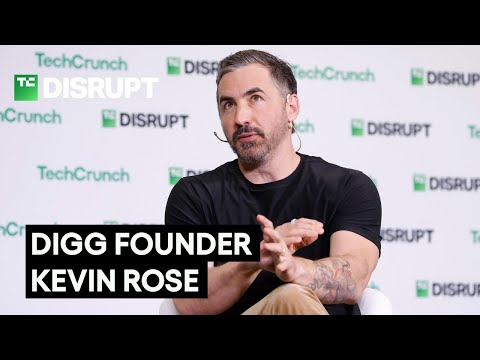 ▶ play
Kevin Rose at TechCrunch Disrupt, where Ohanian told him on stage: “the dead internet theory is real.” Two months before their own relaunch proved it.
▸ Video summary — trusted micro-communities or bust
Condensed by the desk from the session and TechCrunch's write-up.
- Ohanian, on stage: “the dead internet theory is real.” Rose agrees the public feed is unsalvageable at current bot economics.
- His answer is not a bigger feed: it is micro-communities of verified humans with real moderation power.
- Verification via zero-knowledge proofs: prove “owns an Oura ring” without uploading an ID: attributes, not identity.
- Pay the moderators: Substack/Patreon economics for communities. Original Digg ran on millions of unpaid contributors; that era is over.
- The warning: as agent costs collapse, “bots act as though they're humans”, and the postscript wrote itself when their own relaunch died of bots in sixty days.
What fake costs, in dollars
The reason this is a trade and not a mood: the losses are now line items. Hover the bars: the scale is square-root, or the first bar would erase the rest.
The bill for fake triggers, $B
Square-root scale, deliberate and labelled, because charts that hide their scale are part of the disease this note is about.
Crypto’s own corner of this is the purest expression: sybils take ~$7.5B a year out of airdrops; a single September 2025 drop (MYX) leaked ~$170M to one cluster, and $2.57B of DEX volume in 2024 was wash trading. Crypto invented permissionless value transfer and immediately learned that permissionless identity is a subsidy programme for bot farms. Nobody has a stronger commercial incentive to solve reputation than the industry currently paying billions a year for not having it.
Where we push back on the essay
Three honest disagreements, because the strongest version of this thesis needs them.
1. The numbers are directional, not precise. Imperva’s 51% counts every scraper and uptime monitor, not an army of fake people. Ahrefs’ “74% of new pages are AI” measures publication, not consumption. The direction is undeniable; the decimals are marketing. We plot them because they are the best available, and we label the caveats, which most people quoting them do not.
2. Ego is not dying: it is repricing. The essay reads like an obituary. We read it as a migration: status-seeking never disappears, it moves to venues where the trigger still clears. That is why group chats ate the public feed, and why the loudest flex on CryptoTwitter in 2026 is not a follower count: it is a public, verifiable PnL. The demand side of ego is intact. The settlement layer broke.
3. Reputation protocols have a graveyard, and demand was the killer. Klout died. A decade of “decentralized identity” standards produced conference talks. The missing ingredient was never cryptography: it was a buyer who must verify, not one who merely should. That buyer just arrived: software agents doing commerce. A human shrugs at a fake review; an agent that pays a fake counterparty is a bug with a dollar cost. Which is why the essay’s own strongest section is the agent one: it just undersells that agents flip the economics from “nice to have” to “mandatory.”
The agent wave makes it investable
While the essay was circulating, the first real infrastructure shipped. ERC-8004 (identity, reputation and validation registries for AI agents) hit Ethereum mainnet on January 29 with MetaMask, Coinbase, Google and the Ethereum Foundation among ~50 contributors, and registered 45,000 agents in its first month. It composes with x402, the HTTP-native payment rail, into exactly the stack the essay says is missing: who is this counterparty, what has it actually done, and can it pay. The acronym showing up in bank risk decks (KYA, know your agent) tells you where procurement is heading. Portable reputation spent ten years as a solution looking for a problem; agent commerce is the problem, at trillion-dollar scale, on a deadline.
 ▶ play
The best single explainer on the new stack: Bankless with Davide Crapis (Ethereum Foundation) and Austin Griffith on ERC-8004, x402 payments, and what happens when an agent gets a wallet.
▸ Video summary — the ERC-8004 stack in five points
Condensed by the desk from the episode and Bankless's companion piece.
- Three onchain registries: identity (ERC-721 per agent, declared capabilities), reputation (verified client feedback), validation (third-party audit of agent work).
- Spam-resistance by design: a review requires the agent's signed authorization: feedback only from real interactions.
- The full loop: discover via 8004 → negotiate via A2A/MCP → settle via x402 micropayments → reputation accrues onchain, portable anywhere.
- Already shipping: Daydreams' Lucid SDK, the Zyfai yield agent logging ZK proofs, 8004scan and xgate for discovery.
- Launched on L2s first; ~45,000 agents registered in the first month with MetaMask, Coinbase, Google and the EF among contributors.
What this does to CryptoTwitter
CT is the ego machine’s most leveraged instance, so it reprices first. What we are already seeing, and expect to accelerate:
- Follower counts finish dying as a pricing metric. 37.2% of influencer followings show fakery markers; brands and launch teams now ask for engagement provenance, not reach. KOL rate cards built on reach are exit liquidity.
- InfoFi inherits the sybil problem it promised to solve. Attention markets (Kaito-style yaps) turned posting into farming within months: the same $50 fake profile now shills for points. Scoring attention without portable identity just moved the wash trading from DEXes to discourse.
- The flex inverts: receipts over reach. The accounts gaining authority are the ones with verifiable output: public wallets, on-platform PnL, timestamped calls. Anonymous is fine; unverifiable is not. Pseudonymous with receipts is the CT endgame.
- Alpha keeps retreating into group chats (Ohanian is right), which makes the public feed more synthetic, which pushes more humans out: a doom loop for engagement-farmed accounts and a moat for anyone who built distribution on provable work.
How to position — the desk map
What dies: sybil airdrop farming as an industry (the $7.5B/yr extraction is being engineered away: teams now pay for proofs, not wallets); follower-count KOL economics; engagement-purchase as a growth strategy: bought engagement is becoming a negative trigger that verification layers will surface.
What accrues: the verification stack. zkTLS (Reclaim, Opacity, zkPass) turns any web2 account into a portable proof: still private, still early, exactly the stage we like. Attestation layers (EAS) become default plumbing. The ERC-8004 ecosystem is where agent-reputation value will concentrate on-chain. World (WLD) stays the only liquid proof-of-human proxy: flawed tokenomics, real distribution. ENS quietly holds the portable-name franchise. REP (the author’s own project) is one of several attempts at the graph layer: unproven, but aimed at the right hole.
What every crypto-native should change now: treat your on-chain history as your CV: it is the only reputation that already travels. Build the public track record before verification goes mainstream, not after: timestamped calls, a public wallet or verified PnL, receipts attached to claims. If your growth strategy involves buying engagement, stop: you are purchasing future evidence against yourself.
Our position, stated plainly
We believe the reputation layer is the highest-conviction theme in this note and the hardest to buy, which is usually the sign it is early, not wrong. The liquid expressions are poor proxies (WLD), so the honest ways in are private rounds in the zkTLS/attestation stack, the agent-identity ecosystem forming around ERC-8004, and, cheapest of all, behavioral: building the verifiable track record everyone will soon be required to show. That last one is free, and almost nobody on CT is doing it.
!What flips us: if agent commerce verticalizes inside platforms (Amazon vouching for Amazon’s agents, Google for Google’s), then trust stays siloed, the open reputation primitive never accrues value, and this becomes another decade of beautiful protocols nobody demands. Watch whether cross-platform agent transactions actually happen; that is the whole bet.
The TT desk thoughts
The pattern we keep returning to: every layer of the internet commoditised except the one that says who you are and what you did. Content is now free to fake, distribution is free to farm, and the only scarce asset left is provable history. Markets eventually price the scarce thing. Crypto spent fifteen years building settlement for money; the next cycle’s sleeper infrastructure is settlement for reputation, and unlike most crypto narratives, this one has a forced buyer arriving on a schedule: agents that cannot legally or economically transact with counterparties they cannot verify.
Our practical read: don’t buy the narrative tokens that will bloom around “reputation”: buy the boring rails early, and convert your own operation to receipts before the market demands them. That second part is why this desk publishes timestamped calls and is shipping a public watchlist. Not because it is fashionable, but because in the internet this note describes, unverifiable is the same as fake, and we intend to be on the right side of that line before it is drawn.
What would change our mind
A credible measurement of the bot share, made by someone with no stake in selling bot protection. We chart these numbers because they are the best available and we label the caveat plainly: the scale itself is not in dispute, the tenths of a percent are marketing. A measurement without that conflict of interest would change the precision of the claim, not the claim.
Keep reading
Why AI agents need crypto rails · Who is the $36B AI founder nobody’s ever seen? · Do AI margins move from the labs to the infra?